Top Signs You Need Garage Door Service – Don’t Ignore These
A garage door that takes two seconds longer to open than it used to isn’t just getting old. It’s telling you something specific about your spring tension or opener drive that, ignored, usually ends in a failure at the worst possible time. The signs are almost always there first: a sound, a stutter, a gap of daylight, a door that reverses before it shuts. Homeowners dismiss these as minor annoyances. We read them as a diagnosis. If you’d rather not climb the ladder and guess, call (855) 658-5278 and we’ll take a look.
What does uneven door movement actually mean?
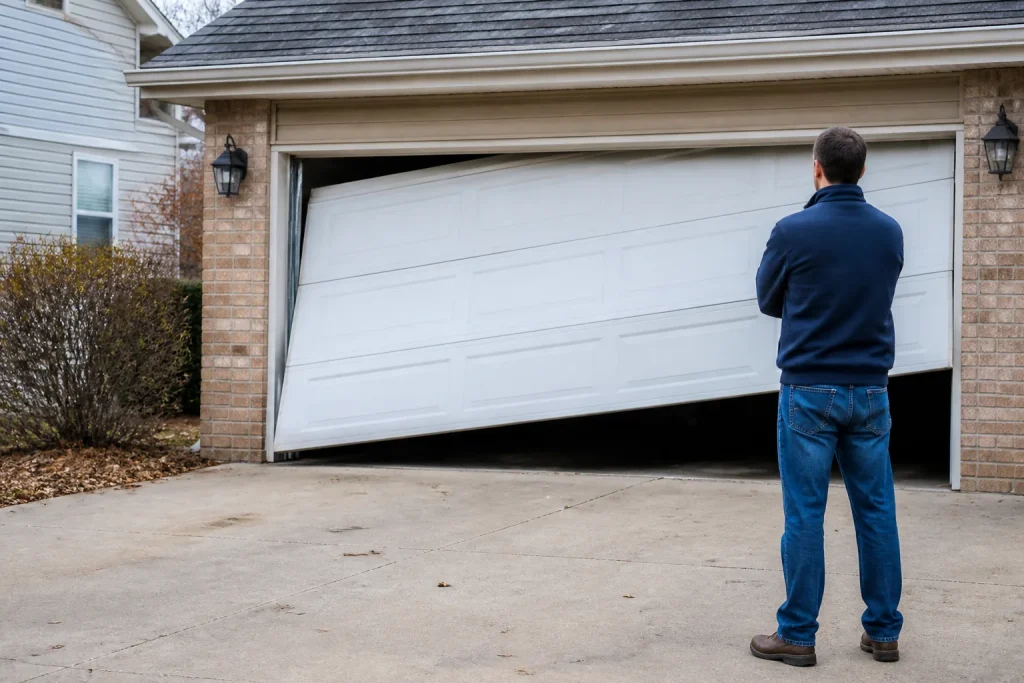
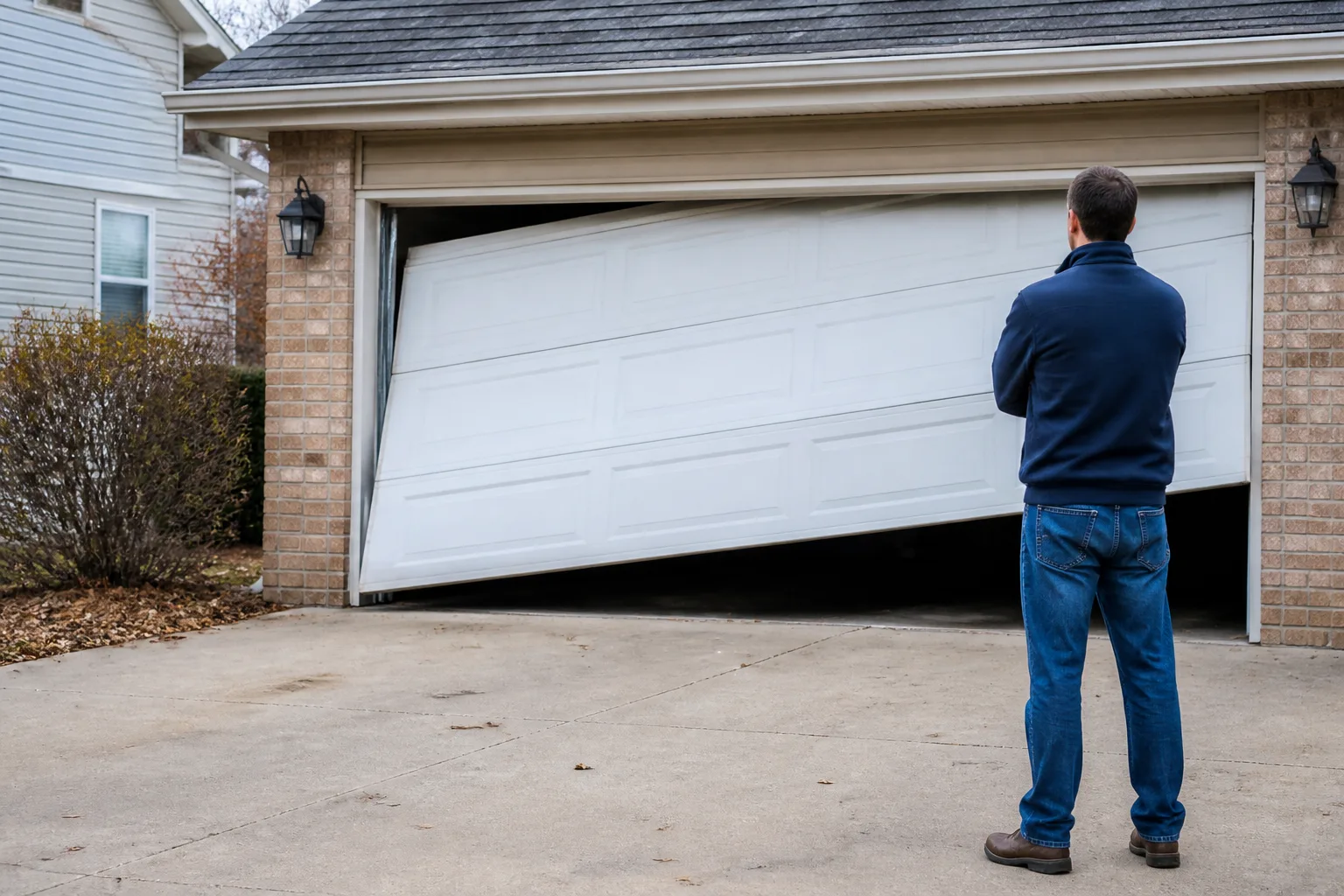
Uneven movement means the door is binding on one side, and it’s almost never “normal settling.” When a garage door racks, tilts, or rises crookedly, the cause is mechanical: a failing spring on one side, a stretched or slipping cable, a bent track, or worn rollers dragging on one edge. In Waukegan, the freeze-and-thaw cycle that runs through our winters works fasteners and wood framing loose, which makes a slightly out-of-square opening more common than it is in milder places. That’s why one side starts to lag.
Here’s the part that matters. A door that lifts crooked puts uneven load on the opener and the springs every single time you press the button. What looks cosmetic becomes a stretched spring, a stripped gear, or a snapped cable within weeks. If you watch your door from inside the garage and one side clears the floor before the other, that’s your warning.
- Door tilts to one side: usually a spring tension imbalance or a bent vertical track.
- Door rises partway then stops: often a strained opener drive or a spring losing its hold.
- Door jerks or shudders: worn rollers, a loose hinge, or debris in the track.
- Door drifts back down after opening: a spring that’s past its working life.
None of these fix themselves, and they tend to compound. Getting ahead of one uneven-lift symptom is cheaper than replacing springs, cables, and an opener later.
The sound diagnostic: what grinding, squeaking, and popping tell you
Your door makes noise, and the type of noise points to a specific problem. This is the fastest way to know what you’re dealing with before anyone opens the panel.
Grinding. A low, rough grinding usually means metal-on-metal friction: dry or seized rollers, a track that’s out of alignment, or debris caught in the channel. Left alone, grinding scores the track and wears the rollers flat. A little lubrication on the right parts quiets early grinding; once it’s constant, you’re looking at garage door repair.
Squeaking. High-pitched squeaks come from hinges, rollers, and the opener’s moving parts running dry. This is the cheapest sign to catch and the most ignored. Squeaking that appears only in cold weather tells us the lubricant has thinned out with the temperature swings Waukegan sees through winter.
Popping or a loud bang. A sharp pop, especially followed by the door suddenly feeling heavy, is a torsion spring giving way. That’s not a lubrication problem. A broken spring means the door’s weight is no longer counterbalanced, and it should not be operated until it’s serviced. Spring repair is one of the most hazardous jobs on a garage door, which is why we treat it as a dedicated specialty rather than an afterthought. If you hear that bang, stop pressing the button and call (855) 658-5278.
Why does my door reverse before it closes all the way?
In most cases, a door that reverses before it closes is a safety sensor problem, not an opener problem. The photo-eye sensors mounted near the floor tell the opener “something’s in the way.” When they’re misaligned, dirty, or blocked, the door goes back up. It’s doing exactly what it was built to do. That protection exists so the door never closes on a child, a pet, or a bicycle.
What to check, in order:
- Look at both sensors. Are they facing each other, or has one been bumped out of line?
- Wipe the lenses. Dust and cobwebs are surprisingly common culprits.
- Check for anything in the path, including a sagging weatherstripping flap or a tool left near the track.
- Look for a blinking light on the sensor. Many openers from Genie, LiftMaster, Chamberlain, and others use the indicator to tell you which side is the problem.
If the sensors are clean, aligned, and the door still reverses, the issue is deeper: a failing sensor, a wiring fault, or a logic board problem on the opener. That’s when garage door opener repair makes sense. We work on the brand you already have, so a fixable opener doesn’t get swapped for a new one. Sometimes a door that reverses is also a symptom of travel-limit drift, which is a calibration issue an experienced technician can reset properly.
Visible cable slack or fraying: a same-week problem, not a watch-it situation
If you can see slack in a lift cable, or strands fraying at the drum or bottom bracket, treat it as a same-week repair. It’s not a “keep an eye on it” situation. A cable under normal tension carries the door’s full weight, and a frayed cable can snap without warning. When it does, the door can drop unevenly and damage the panels, the track, or whatever is underneath it.
Cables wear for a reason. Fraying often means the drum is worn, the door is out of balance, or the cable was never run cleanly along the track. In Waukegan, cold snaps contract metal, which tightens tolerances and speeds up wear at the drum. A cable that looked fine in fall can look frayed by the middle of winter. Never try to adjust or replace a tensioned cable yourself; the stored energy in the system can cause serious injury. This is work for someone with the right tools and training.
Alongside springs and cables, we also handle opener and roller issues on standard doors from Clopay and Amarr, so a single call covers the whole assembly rather than just one part.
Cold air, energy bill creep, and why weatherstripping matters
Not every sign of trouble is mechanical. If your energy bill creeps up in a way you can’t explain, or you can see daylight under the door or feel cold air near the frame, your weatherstripping and bottom seal are the likely cause. Waukegan winters are hard on seals. They crack, harden, and pull away from the frame, letting heated air escape and cold air in.
The cost of a bad seal isn’t just comfort. Weatherstripping failure lets moisture and grit reach the tracks and rollers, and a door that has to overcome extra resistance every time it opens puts more demand on the springs. That’s the connection most homeowners miss: a $30 seal can fail quietly for a season and shorten the life of a spring that eventually needs a professional repair. A bottom seal that’s stiff or torn is a quick fix and one of the best things you can do for the whole system before summer heat and winter cold fight over it again.
When to call a pro
Check the easy things yourself: sensors, seals, and a visual pass over the cables and springs. But if a spring is broken, a cable is frayed, the door hangs crooked, or the opener struggles through a full open and close, stop and call. These are the situations where a DIY attempt or a delay both tend to make the repair bigger. Our technicians have up to 13 years of experience and can diagnose the problem without pushing a replacement you don’t need.
Related services in Waukegan: if your symptom points to a spring, see garage door spring repair. For the full picture of what we do, start at Waukegan Garage Door Repair Pros.
The Bottom Line
Most garage door failures announce themselves well before they happen. Uneven movement points to a binding track, a failing spring, or a slipping cable. Grinding, squeaking, and popping each tell you something specific about rollers, lubrication, or a spring at the end of its life. A door that reverses usually has a sensor problem, not a dead opener. Frayed cables and visible slack need prompt attention, and worn weatherstripping does more damage to your springs than most people realize. Catch any one of these early and you likely avoid a bigger repair. Ignore them and they tend to arrive together.
If you’re in Waukegan and need help, Waukegan Garage Door Repair Pros offers free estimates – call (855) 658-5278. We handle everything from same-day repair through complete new installation, including dedicated emergency garage door service for the moments that can’t wait. Repair first, replace only when necessary.
Frequently Asked Questions
Repair is usually the answer when the door structure is sound and the problem is a spring, cable, roller, opener, or sensor. Replacement makes more sense when panels are badly dented or rusted through, the track is bent beyond straightening, or repeated repairs on an aging door start adding up. We diagnose first and recommend repair whenever it’s the honest call.
Usually not. A squeak or a light grind is a maintenance issue you can schedule. A loud bang followed by the door feeling very heavy is different: that’s likely a broken spring, and the door shouldn’t be used until it’s serviced. If the door won’t move at all or a cable has snapped, that’s when our emergency garage door service matters. Call (855) 658-5278 for an exact quote – estimates are free.
No, and it shouldn’t be forced. The spring counterbalances the door’s weight; once it fails, the opener is lifting the full load, which can strip the drive or drop the door. Keep it closed and get it serviced by a trained professional. Springs are one of the most hazardous parts of the system.
Once a year is a good baseline for most homes, and more often in a climate like Waukegan’s, where freeze-and-thaw cycles work on tracks, seals, and fasteners. An annual tune-up catches uneven movement and worn cables before they become spring repairs.
Written by the team at Waukegan Garage Door Repair Pros.
Need Garage Door Help?
Call Waukegan Garage Door Repair Pros - the local pro we connect you with is licensed and insured, here with fast after-hours help in Waukegan.
(855) 658-5278